
Ferhat Can Büyük on Sincerity in Music
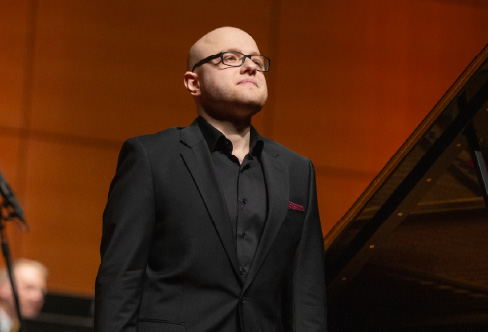
Pianist Ferhat Can Büyük shares with us the milestones that have improved him as a musician, and the thoughts that have influenced his approach to music, as well as his relationship with classical music. We’re taking you on a journey of his where discipline and freedom go hand in hand, shedding light on his musical identity.
In all his sincerity, Ferhat Can Büyük tells us about his career, which has been shaped by national and international accomplishments, and his approach to music and the piano. Music is not just an art, but a language that communicates life itself, says Ferhat Can Büyük in this interview where he talks about how this journey, which first started with discipline as its only passenger, turned into an area of expression intertwined with freedom.
What feeds you, other than performing on stage, and influences your music indirectly?
Other than the stage, life itself is what really feeds me the most. Long walks, simple moments with loved ones, or time alone with a good book... These things clear my mind and help me to approach music with greater sincerity. Sometimes, I find that willingly taking some distance from things also works for me because when I come back, I feel like I can play with a fresh ear and a more honest expression. Another helpful thing is to make contact with different branches of art, whether it’s watching a film, looking at a painting, reading a short text full of impressive writing, or chatting with another musician friend about the relation between art and life - all of these things just awaken feelings in you. And it’s like, when I sit at the piano, all those feelings just find their place in some way. To sum up, I can say that what I tell on stage is also a little bit of a reflection of the life I’ve had outside the stage.
Could you tell us about the milestones that have brought you to where you are in your career today?
There are several important milestones that have brought me to where I am now. In particular, I have to say that the time when I was accepted into Prof. Meral Yapalı’s class was a very valuable moment for me. We worked together for many years, which I would describe as a very special process that deepened my approach to music and shaped my musical identity. Winning first prize in the series called “Stars Shining In Loving Memory Of Meriç Soylu”, organised by İş Sanat in 2015, was an important step for me as it helped me gain more recognition in Türkiye. Then came the scholarship from the Borusan Kocabıyık Foundation for my overseas education, which was a huge support for me to take my dreams to a higher level. I will never forget that support for the rest of my life. Attending international competitions throughout my time studying abroad also opened different doors for me. Winning first prize and the Grand Prize award at the Antonin Chopin Competition in Poland became huge especially in Poland, resulting in me receiving invitations to many festivals and concerts across Europe. Plus, at the time, a very popular radio station in Poland, PIK Radio, played one of my recitals live. Moreover, winning the “Best Beethoven Interpretation” category at the 2020 “Malaysia Virtual International Music Competition”, which was held as part of the Beethoven Year, was another meaningful milestone in my career. All of these experiences gradually took me to higher levels, complementing each other as they shaped my musical identity.
Regarding your instrument, the piano - is it more of a discipline to you, or an area of freedom?
Frankly, the piano is both a discipline and a freedom to me, but these two are not different from each other. Discipline includes sitting at the piano every day, dealing with details, and confronting yourself... This process is sometimes challenging, but it is also what opens the door to freedom. Once you have established that technical and mental infrastructure, a whole different area will open up for you on stage. That’s when the piano becomes a total tool for expression for me, with the stage turning into a place where I can freely share whatever I’m feeling at the time or whichever story I want to tell. I mean, what initially starts as a discipline becomes, over time, a very personal and free language. I think it is this balance that attracts me the most in the connection I established with music and my instrument.
In this concert, you shared the stage with Gürer Aykal, one of the most important conductors in Türkiye. How would you describe your experience of working with him?
Gürer Aykal has always had a very special place with me, as he is an authority trained by our Republic whom I have great respect for. As you can imagine, it was a great honour for me to share the stage with him. Before our latest concert with the Borusan Istanbul Philharmonic Orchestra, I had the opportunity to perform Chopin’s Piano Concerto No. 2 with him in company with the Istanbul State Symphony Orchestra. Ever since that experience, I have wanted to share the stage with him at every opportunity. Working with him was a huge gain for me. Thanks to his depth of approach to music and his experience, we gave an amazing concert. Besides that, I believe that, as a young musician, that concert had a permanent impact on me and helped me progress more. The expression he brought to work includes a high level of understanding and musical depth that every pianist would long for. His habit of working alone with the pianist as a conductor on the work after orchestra rehearsals is testament to the care and attention he shows to his profession. This approach hints not only huge mastery, but also very sophisticated musical sensitivity. That natural balance he establishes on stage, along with the sense of breathing together, takes the performance to a more meaningful point. Frankly, I would love to perform all the concertos in my repertoire with him, and I hope that will be possible... In fact, I have this project to perform Beethoven’s five piano concertos in a marathon of concerts, and I would love to do it with him. I hope that I will find the opportunity to turn this dream into reality one day in the future. By the way, I would also like to highlight the value of each musician in the wonderful Borusan Istanbul Philharmonic Orchestra- sharing the stage with them was an unparalleled experience for me.
As a young artist, how would you describe the contribution you make, in terms of getting people in your age group closer to classical music?
As a young artist, one of the things I care about most is being able to share classical music in a more reachable and sincere setting. I think what our generation needs most is to eliminate the feeling that this music is “distant” or “difficult”. I try to be as sincere as possible on stage, communicating music exactly as I feel it. So, it is just as valuable for me if someone listening to my music can establish a connection with those feelings. Other than this, it is also important for me to engage with people outside of concerts as well. I think sharing my thoughts on music and my working processes, or perhaps talking about the background of a work, on social media and other platforms helps reduce the distance with the audience. In short, what I do is to try to take classical music more “into life”. I feel like I have made the greatest contribution when people in my age group feel that my music has spoken to them.
What other types of music/which other musicians do you listen to, besides classical music?
I am a huge classical music listener. As my father was also a musician, I grew up from a very young age listening to a variety of selected music at home. That’s why there are many artists, other than those in classical music, who have fed my ears and left their mark on me. Other than classical music, I listen to artists including Steely Dan, Donald Fagen, Herbie Hancock, Miles Davis, George Benson and Pat Metheny. Moving towards more popular music, I also listen to artists such as Sting, Phil Collins, Peter Gabriel, Fleetwood Mac, Michael Franks, Billy Joel and Al Jerrau... and the list goes on. These are the ones that first popped into my mind, shaping my ear since childhood. And today, I can say that music by musicians including Dominic Miller, Brad Mehldau and Mathias Eick excites me. I have an extensive music archive mostly consisting of ECM records, predominantly featuring instrumental improvisation.
Share on


