
From Tradition to the Future with François-Frédéric Guy
Acclaimed for his interpretations of Beethoven, François-Frédéric Guy combines this artistic legacy with the bold world of Mozart, offering audiences a thoughtful perspective.
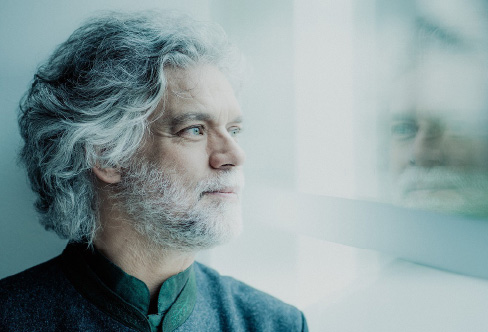
A journey that began at the age of seven with a concerto played by ear now culminates in the mature artistry of a musician recording Beethoven’s complete piano sonatas for the second time. For François-Frédéric Guy, Beethoven remains one of the principal sources shaping his musical outlook. In this interview, Guy reflects on his long-standing relationship with Beethoven, explores the distinctive world of Mozart’s Piano Concerto no.22—performed in this concert with the Borusan Istanbul Philharmonic Orchestra—and considers the responsibilities facing musicians today.
Ludwig van Beethoven’s works hold a significant place in your recording career. How would you describe your relationship with Beethoven?
Every important stage of my musical career has been marked by Beethoven. At the age of seven, I played the first concerto by ear instead of my pieces for children, and it was with this concerto that I won my first prize at the Paris Conservatoire. My first recording for Harmonia Mundi was dedicated to opus 109 and the Hammerklavier. Then came the complete recordings of the concertos, both on disc and in concert, as well as chamber music. I even conducted some of the symphonies, including the famous Fifth! So, it's a long-term, ongoing relationship. Beethoven is at the centre of my musical life. For me, he is the alpha and omega of music. I couldn't imagine my career, and perhaps even my whole life, without Beethoven's music.
You have recorded all of Beethoven’s sonatas and piano concertos… How would you describe the deep connection you have established with Beethoven?
It is true that playing or even recording all 32 sonatas is an immense intellectual and physical challenge. I am currently recording Beethoven's complete piano sonatas for the second time, and this music is so demanding on every level that I can tell you that you are no longer the same person after going through this experience... When I give a concert, I like to follow the chronological order of the opus, which allows the audience to discover Beethoven's musical biography according to Liszt's classification: the adolescent, the man, the god! It also helps me to understand and convey to the audience Beethoven's stylistic and pianistic evolution, which brought music and the piano as an instrument into the modern world. It's as if I were taking the audience on a huge cruise across the oceans of Beethoven's music.
What has this marathon taught you?
I would say that it takes both great humility and amazing self-confidence to undertake this journey through the 32 sonatas and even the five piano concertos, which, although shorter, could be considered to have less significant stakes than the 32 sonatas, the true bible of musicians. I have noticed that there is a multitude of connections between the sonatas, concertos and chamber works, as well as between the phrases that make up these works. All the musical pieces are mysteriously connected, as if they formed a secret code or a vast puzzle. Once assembled, this puzzle reflects the complexity of the human soul, encompassing its unique characteristics, emotions, and questions.
What has been the greatest source of motivation for you throughout your career?
I would like to highlight two key points: firstly, I strive to reveal and convey to the audience the beauty and transcendence of the music I perform.
Secondly, and perhaps more selfishly, I want the opportunity to play the pieces that are closest to my heart. And one of my greatest sources of motivation is to perform music that, in a way, changes the history of music. I would call this ‘the Armstrong syndrome’ to describe this phenomenon: ‘That's one small step for man, one giant leap for mankind.’
What has been the most challenging aspect for you in performing Mozart’s Piano Concerto no.22 in this concert?
Although not as well-known as its predecessor or successor, this concerto remains, in my opinion, unrivalled in its boldness. The piece's operatic charm, its grandiose aspect, and the assurance of the first movement, as well as the poignant expressiveness of the variations constituting the central movement, and even the ethereal lightness of the concluding movement, all combine to create an irresistible effect, in my opinion.
What is the greatest challenge facing young pianists today in building a successful career? What advice would you offer them?
In my opinion, the most crucial aspect for a young pianist is to adhere to their musical goals, aspirations, and desires, while endeavoring to disregard superficial distractions. In the contemporary era, image holds greater significance than sound, while the pursuit of factual perfection supersedes musical transcendence. The number of views or 'likes' on social media’s platforms is often prioritized over the intrinsic value of the performers and the artist's interpretation. While acknowledging the influence of these factors, it is imperative for the musician to preserve their integrity and maintain their personal values.
How do you assess the responsibility of artists in building a closer connection between classical music and today’s audiences?
To continue answering the previous question, I think that, strangely enough, social media and music streaming platforms can offer a valuable opportunity to reach a younger and different audiences with classical music, but I assume it is difficult to overestimate the importance of attending a live concert. Artists have the incredible power to show audiences that classical music is not just for connoisseurs (although it is for them too!), but for anyone with a taste for curiosity and a desire for beauty. Despite popular belief, the popularity of classical music concerts remains undiminished, and audiences continue to flock to performances. This is a positive trend to observe.
Share on


