
Simplicity and Balance at the Piano with Jan Lisiecki
Renowned for the clarity and simplicity of his interpretations, one of the most compelling pianists of his generation, Jan Lisiecki, reflects on his approach to music, the connection he establishes with his audience, and the communicative power of classical music.
Distinguished for his clear, refined and profoundly insightful interpretations, Jan Lisiecki places a deep respect for the composer at the heart of his musical approach. Seeking to render the essence of the music fully perceptible, Lisiecki establishes a strong and sincere rapport with audiences through both his carefully considered repertoire choices and his poised presence on stage.
In this interview conducted with the artist who performed in Istanbul as part of the Borusan Istanbul Philharmonic Orchestra’s “New Year Concert”, an engaging and insightful conversation awaits—ranging from the preparation process before taking the stage to the interpretation of Mozart in the concert, and from the significance of classical music for new audiences to the artist’s musical habits in daily life.
Your interpretations are often described as clear, poised, and free of excess. Do you agree with that?
That is the greatest compliment as it is definitely the goal when I perform, to honor the beauty of the music, to honor the composer's intentions, and not to put myself in front of music.
Each concert hall possesses its own distinctive energy. Could you kindly elaborate on your process of adapting to a new venue and a different piano in the period leading up to a performance?
The most important aspect of adjusting to a new concert hall, a new piano, is actually spending time in the hall on the piano. And, that's something I always strive to do even though at times it might be difficult. It might require me coming in quite early in the morning, for instance, or working at the same time as the crew is in the hall. But working on this piano, I think, makes you really bring out the best that you can. And that extra few percent of playing, of course, I could play simply coming in straight into the hall and straight onto the piano, but having that extra little bit, of knowledge allows you to do those magical things that you would like.
What would you identify as the most significant difference between the emotions you experienced the very first time you sat at a piano and those you feel today as you step onto the stage?
The time that I first sat down at the piano is so, so long ago that I I can't even remember. Certainly, now the piano is not only an extension of my body and something I feel very comfortable with, but also key aspect of my life. And I truly enjoy the fact that I’m able to share music with people all around the world.
Mozart’s Piano Concerto no. 9, “Jeunehomme”, is an extraordinary work in which a young composer boldly pushes the boundaries of form and expression. In performing this concerto, which aspect of Mozart’s musical conception or expressive language do you find most rewarding to bring to the fore?
Very much like in your first question. Mozart is a composer of pure intentions, of beauty, of joy, of emotions. And I think that simplicity and elegance are the hardest things actually to convey, because going into a composer's work without having the luxury of net, of romanticism, of sort of beauty and lush sound, but this purity and vitality that you need to convey, on the one hand, the precision that is needed to really honor the music, and on the other hand, this elegance and still musicality that you need to bring to it, that I think is the biggest challenge, but also the biggest joy because having this limited possibility means that you’re working within a sphere, and then you have a very specific goal in mind.
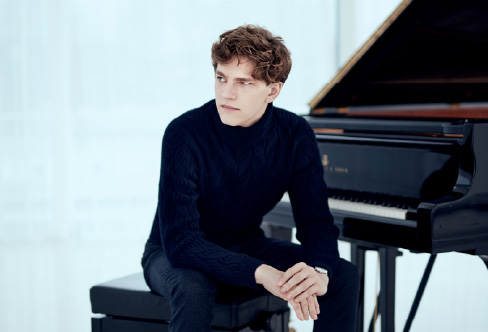
New Year’s Concerts tend to occupy a distinctive space, often drawing in audiences who may otherwise feel somewhat distant from classical music. In your view, what kind of experience does this concert offer to someone attending a classical music performance for the very first time?
I think it's wonderful to allow audiences, broader audiences, access to classical music while simultaneously still offering them the highest quality music that there is. Music is, after all, about sharing, about enjoying it. And even such music that is popular, such as Strauss Waltz, is amazing music. And it is still high quality composition. And I think that if an audience member then comes and listens to this and might be inspired to come to another concert, then that is a fantastic initiative.
Which genres of music do you most enjoy listening to outside of classical music?
Since I'm immersed in music from most of the day and almost every day of my life, I don't actually actively listen so much to music. When I do, of course, classical has a big role. I will also happily listen, however, to a normal radio station with the latest hits from all around the world. And if I have spare time and a calm evening, then, of course, I will happily listen to some jazz or perhaps some Pink Floyd and discover music by others, from many eras. I’m quite open, I would say.
Share on


